
Around 5,000 years ago, the Sumerians of ancient Mesopotamia (modern Iraq) developed a system of timekeeping that still shapes our lives. Their sexagesimal system, based on the number 60, gave us the familiar divisions of 60 minutes per hour and 60 seconds per minute.
Why 60?
• Sixty divides evenly by 2, 3, 4, 5, 6, 10, 12, 15, 20, and 30, making calculations easier.
• It suited astronomical observations: many cycles in the sky (lunar months, seasons) approximate multiples of 60.
Driven by Agriculture and Ritual
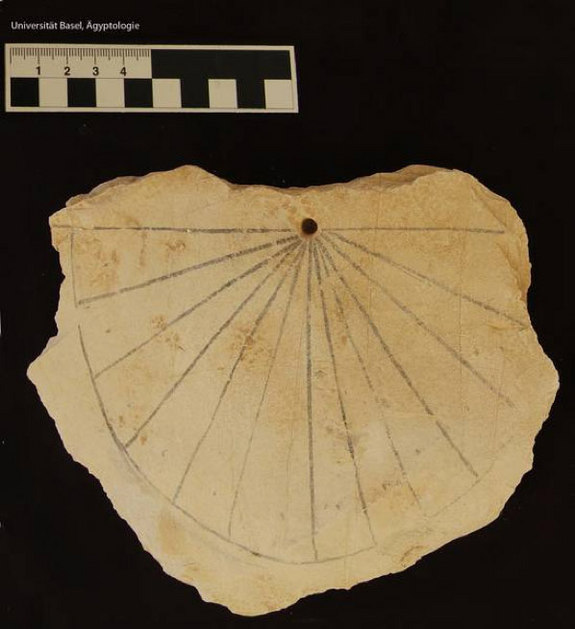
• Precise calendars were critical for planting and harvesting in the Tigris–Euphrates valley.
• Religious ceremonies were tied to celestial events like solstices, equinoxes, and moon phases.
• Temple administrators used time divisions to schedule irrigation, markets, and festivals.
Astronomical Observations
• Sumerians tracked the moon’s phases to create a 12‑month lunar calendar.
• They monitored planetary movements and star risings, laying the foundation for later Babylonian astronomy.
• This early sky‑watching helped predict flooding cycles and guided seasonal labor.
The 24‑Hour Day
• Dividing the day into 24 hours may reflect combining two 12‑hour cycles (daylight and night).
• This framework influenced later Babylonian and Greek astronomy, which formalized degrees of arc (360° circle = 6×60).
Benefits
• Practicality: Divisible numbers made trade, construction, and astronomy calculations easier.
• Predictability: Allowed accurate eclipses and seasonal forecastscenturies later.
• Legacy: Our clocks and 360° geometry descend directly from this system.
Challenges
• Lunar vs solar mismatch: Their 12‑month lunar calendar drifted from the solar year, requiring periodic corrections.
• Complex calculations: Base‑60 arithmetic is awkward for modern base‑10 users.
• Observation limits: Naked‑eye astronomy meant errors accumulated over generations.
Enduring Influence
• The Babylonians, Greeks, and Romans refined Sumerian methods.
• Modern astronomy still measures angles in degrees, minutes, seconds— a direct link to Sumerian math.
• Every time we glance at a clock, we echo their innovation.