
The study of stars took a monumental leap in 1925 when Cecilia Payne-Gaposchkin unlocked the mysteries of stellar composition. Her groundbreaking work overturned long-held assumptions about the universe, earning her a place among the greatest astronomers of all time. In her lifetime, Payne-Gaposchkin achieved remarkable firsts, not only in her scientific discoveries but also as a trailblazing woman in a male-dominated field.
Early Life and Education
Cecilia Helena Payne was born on May 10, 1900, in Wendover, England. Growing up in a family that valued education, she displayed an early aptitude for mathematics and science. At St. Paul’s Girls’ School in London, her interest in astronomy blossomed after reading the works of prominent figures such as Galileo Galilei and Sir Isaac Newton . A pivotal moment came when she attended a lecture by Arthur Eddington, who discussed the 1919 solar eclipse that provided observational proof for Albert Einstein’s theory of general relativity. Inspired, Payne resolved to pursue a career in astronomy.
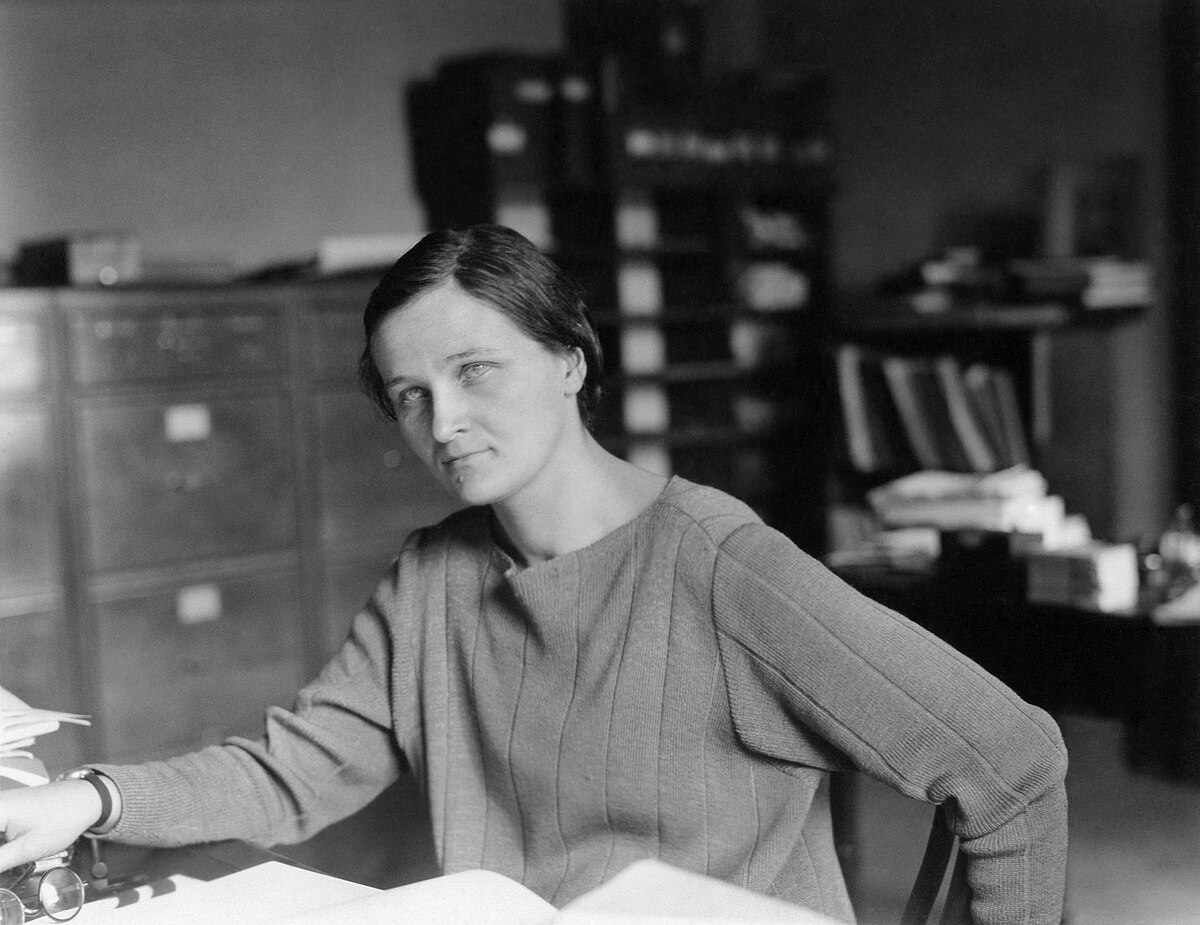
Payne attended the University of Cambridge, where she studied physics and chemistry. Despite excelling academically, Cambridge did not award degrees to women at the time, a frustration that drove her to seek opportunities abroad.
A Move to America
In 1923, Payne emigrated to the United States to study at Radcliffe College, affiliated with Harvard University. She joined the Harvard College Observatory under the mentorship of Harlow Shapley, a key figure in mapping the structure of the Milky Way. Shapley encouraged Payne to investigate the patterns of stellar spectra, a relatively new field at the time.
Payne’s work was influenced by the foundational discoveries of Annie Jump Cannon and Henrietta Swan Leavitt. Cannon’s stellar classification system provided the organizational framework Payne needed, while Leavitt’s discovery of the Cepheid variable relationship offered critical tools for measuring distances in space. These influences underscored the collaborative and cumulative nature of astronomical progress.
Groundbreaking Discoveries
In 1925, Payne published her doctoral thesis, Stellar Atmospheres, A Contribution to the Observational Study of High Temperature in the Reversing Layers of Stars. By applying quantum mechanics, she demonstrated that hydrogen is the most abundant element in stars, followed by helium. This discovery overturned the prevailing belief, rooted in the works of earlier astronomers like Tycho Brahe, that stars and Earth shared similar compositions.
Payne’s thesis marked a turning point in astrophysics. Although initially dismissed by Henry Norris Russell , he later confirmed her findings and publicly endorsed her conclusions, albeit claiming much of the credit himself.
Challenges and Achievements
Despite her monumental contributions, Payne faced significant barriers as a woman in science. For much of her early career, she was relegated to low-paying research positions and denied a professorship. Nevertheless, she persisted, publishing extensively on variable stars alongside her husband, Sergei Gaposchkin. Together, they built upon Leavitt’s work to further refine the study of cosmic distances.
In 1956, Payne finally achieved a milestone by becoming the first woman to receive a full professorship at Harvard. Her appointment as chair of the Astronomy Department marked a historic moment, breaking barriers for women in academia and setting an example for generations to come.
Legacy
Cecilia Payne-Gaposchkin’s contributions to astronomy redefined our understanding of the universe. Her discoveries about the elemental composition of stars laid the groundwork for modern astrophysics, influencing subsequent work by figures such as Edwin Hubble, whose observations of galaxies expanded the scale of the known universe.
Her story exemplifies the interconnectedness of scientific progress. Without the classification system of Cannon, the Cepheid findings of Leavitt, or the encouragement of mentors like Shapley, Payne’s groundbreaking discoveries might have taken decades longer to emerge.
Payne’s legacy also includes her written works, such as Stars in the Making, and her role as a mentor for future astronomers, ensuring the torch of discovery was passed forward. Her achievements stand alongside those of pioneers like Nicolaus Copernicus and Johannes Kepler, whose revolutionary ideas reshaped humanity’s understanding of the cosmos.
Scoring Section
- Contribution to Astronomy: 45/50 For her groundbreaking discoveries about stellar composition and her pioneering integration of quantum mechanics in astrophysics.
- Advancement of the Field: 25/30 For building on the foundations laid by Leavitt, Cannon, and others while influencing subsequent developments in stellar evolution.
- Recognition and Honors: 15/20 Though Payne received major accolades later in life, her contributions were often overlooked during her career, reducing her recognition score slightly.
- Historical Significance: 8/10 As the first woman to earn a full professorship at Harvard and a pioneer in stellar astrophysics, Payne’s story is one of persistence and scientific revolution.
Total Score: 93/100