
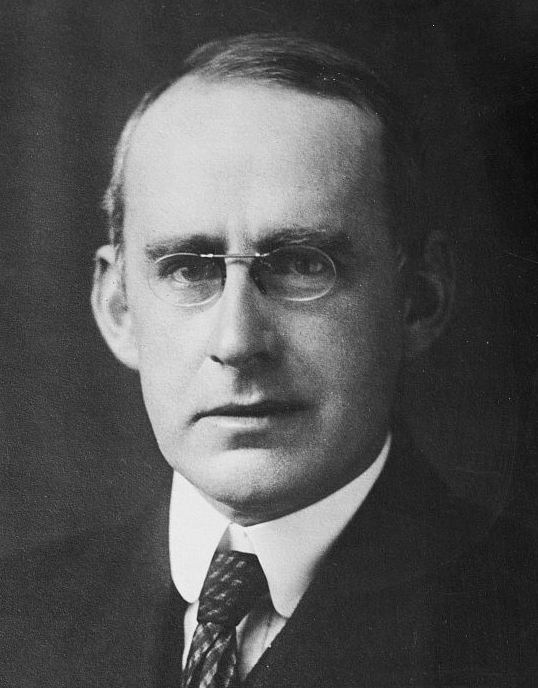
Arthur Eddington was a pioneering astrophysicist who bridged theoretical physics and observational astronomy, revolutionizing our understanding of stars and their internal processes. His confirmation of Einstein’s theory of general relativity during the 1919 solar eclipse placed him at the forefront of 20th-century science. Eddington’s contributions to stellar structure, his advocacy for general relativity, and his skill as a communicator left a lasting legacy on both astronomy and physics.
Early Life and Education
Arthur Stanley Eddington was born on December 28, 1882, in Kendal, England, to a devout Quaker family. Raised with strong ethical principles and a love of learning, Eddington excelled academically. He attended Owens College, Manchester, before earning a scholarship to Trinity College, Cambridge, where he studied mathematics and physics.
Eddington’s early career was shaped by his appointment as Chief Assistant at the Royal Observatory in Greenwich. There, he honed his skills in observational astronomy, which would later complement his theoretical work. By 1913, Eddington became Plumian Professor of Astronomy at Cambridge, a position that provided the platform for his groundbreaking contributions.
Contributions to Astronomy
The Structure of Stars
Eddington’s most significant work was his theory of stellar structure. In his 1926 book The Internal Constitution of the Stars, he proposed that stars generate energy through nuclear fusion, though the exact mechanism was not yet understood. Eddington’s pioneering use of physics and mathematics to model stellar interiors marked a major turning point in astrophysics, moving the field beyond descriptive observations to quantitative analysis.
His insights built upon earlier work by Annie Jump Cannon and Cecilia Payne-Gaposchkin, whose spectral classifications provided the data Eddington used to explore the relationships between a star’s mass, luminosity, and radius. These relationships remain fundamental to modern astrophysics.
General Relativity and the 1919 Eclipse
Eddington’s role in confirming Einstein’s theory of general relativity during the 1919 solar eclipse cemented his reputation as one of the greatest scientists of his time. By measuring the deflection of starlight around the Sun, Eddington provided the first experimental proof of Einstein’s predictions.
This achievement elevated both Eddington and Einstein to global fame, symbolizing the power of science to transcend national boundaries in the aftermath of World War I.
Advocacy for Relativity
Beyond his observational work, Eddington was a tireless advocate for general relativity, translating and explaining Einstein’s complex theories for English-speaking audiences. His ability to communicate cutting-edge science made relativity accessible to a broader community, inspiring generations of physicists and astronomers.
Influence on Other Astronomers
Eddington’s work influenced many key figures in astronomy and astrophysics. His theoretical models laid the groundwork for Subrahmanyan Chandrasekhar, who expanded upon Eddington’s mass-luminosity relationships to develop the theory of white dwarfs.
His confirmation of general relativity also influenced the development of cosmology, guiding the work of Edwin Hubble in understanding the expanding universe. Eddington’s legacy extended to students and colleagues, including those who would later uncover the mechanisms of nuclear fusion that power stars.
Challenges and Advocacy
Eddington faced challenges in balancing his Quaker principles with his scientific pursuits, particularly during World War I. As a conscientious objector, he defended his pacifist stance, which earned him both admiration and criticism. Despite this, his commitment to international collaboration helped repair scientific relationships fractured by the war.
Eddington was also a staunch advocate for expanding access to education, particularly for women. His mentorship of Cecilia Payne-Gaposchkin reflected his belief in equality and his willingness to support young scientists regardless of gender.
Legacy
Arthur Eddington’s contributions to astronomy and physics reshaped humanity’s understanding of the cosmos. His work on stellar structure and his role in confirming general relativity placed him alongside the most influential scientists in history, including Newton and Einstein.
Eddington’s influence extended far beyond his scientific discoveries. His books, such as The Nature of the Physical World, inspired countless readers to explore the mysteries of the universe. His legacy lives on in the countless astronomers and physicists who built upon his work, as well as in the institutions and observatories that continue to honor his name.
Scoring Section
• Contribution to Astronomy: 40/50
For developing the theory of stellar structure and confirming Einstein’s general relativity, two of the most significant contributions in 20th-century science.
• Advancement of the Field: 30/30
For bridging observational and theoretical astronomy, influencing figures like Chandrasekhar and Payne-Gaposchkin, and advancing the study of both stars and general relativity.
• Recognition and Honors: 13/20
While highly respected, Eddington’s fame as a communicator sometimes overshadowed his scientific contributions, leading to mixed recognition in some circles.
• Historical Significance: 5/10
As a key figure in stellar astrophysics and a global ambassador for general relativity, Eddington’s historical significance is undeniable but less celebrated than figures like Copernicus or Galileo.
Total Score: 88/100