


Christian Doppler’s discovery of the Doppler Effect revolutionized our understanding of wave phenomena, influencing fields as diverse as astronomy, physics, and meteorology. By demonstrating that the frequency of waves changes with the motion of their source, Doppler provided a key tool for studying the universe. His insights laid the groundwork for measuring the motion of stars and galaxies, which later proved critical in understanding the expanding universe.
Early Life and Education
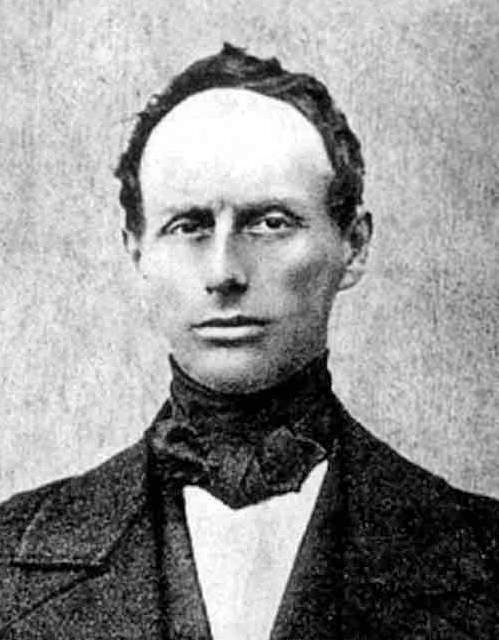
Christian Andreas Doppler was born on November 29, 1803, in Salzburg, Austria. The son of a stonemason, Doppler was expected to join the family business. However, health issues prevented him from pursuing manual labor, allowing him to focus on academics.
Doppler studied mathematics, physics, and mechanics at the Polytechnic Institute in Vienna, where he excelled in theoretical work. After completing his education, he held various teaching and research positions across Europe, where his innovative ideas began to take shape.
The Discovery of the Doppler Effect
In 1842, Doppler published his seminal work, Über das farbige Licht der Doppelsterne und einiger anderer Gestirne des Himmels (On the Colored Light of Double Stars and Certain Other Stars of the Heavens). In this paper, he proposed that the observed frequency of waves, such as light or sound, changes when the source of the waves is in motion relative to the observer.
This phenomenon, now known as the Doppler Effect, was revolutionary. Doppler suggested that the colors of light emitted by stars could reveal their motion relative to Earth. Though initially met with skepticism, his theory was later confirmed experimentally and became a cornerstone of wave theory.
Applications in Astronomy
Doppler’s discovery had profound implications for astronomy. By applying the Doppler Effect to light waves, astronomers could measure the radial velocities of stars and galaxies. This capability transformed the field, enabling scientists to:
• Determine whether celestial objects are moving toward or away from Earth (redshift and blueshift).
• Study the dynamics of binary star systems.
• Measure the rotation of galaxies and the motion of galaxy clusters.
Edwin Hubble famously used the Doppler Effect to measure the redshift of galaxies, leading to the discovery of the universe’s expansion and the formulation of the Big Bang theory. Doppler’s work also influenced later studies of stellar spectra by figures such as Annie Jump Cannon and Cecilia Payne-Gaposchkin.
Broader Contributions
While Doppler is best known for his eponymous effect, his contributions extended to other areas of physics and mathematics. He conducted studies on wave propagation in fluids and the behavior of sound waves, providing insights that influenced acoustics and meteorology.
Doppler’s ideas also inspired the development of technologies like radar, sonar, and Doppler weather radar, which rely on the same principles to measure motion and velocity.
Challenges and Recognition
Doppler’s work was not universally accepted during his lifetime. Many of his contemporaries dismissed his ideas as overly theoretical, and the experimental confirmation of the Doppler Effect did not occur until the 1840s, shortly before his death.
Despite these challenges, Doppler continued to innovate, eventually becoming the director of the Institute of Physics at the University of Vienna. His perseverance and dedication to science ensured his theories would eventually gain the recognition they deserved.
Legacy
Christian Doppler’s discovery of the Doppler Effect remains one of the most significant contributions to physics and astronomy. His insights provided astronomers with a powerful tool for studying the universe, enabling breakthroughs in fields ranging from stellar dynamics to cosmology.
The Doppler Effect’s influence extends far beyond astronomy. Its applications in medical imaging (Doppler ultrasound), aviation, and meteorology highlight its enduring relevance. Doppler’s name is immortalized in scientific terminology, ensuring his contributions will be remembered for generations.
Awards and Honors
While Doppler received limited recognition during his lifetime, his legacy has been honored posthumously through:
• The naming of the lunar crater Doppler.
• Numerous scientific terms and technologies bearing his name (e.g., Doppler radar, Doppler shift).
• Commemorations in his birthplace, Salzburg, including the Christian Doppler Laboratory and Research Society.
Scoring Section
• Contribution to Astronomy: 30/50
For discovering the Doppler Effect and its application to measuring the motion of celestial objects.
• Advancement of the Field: 30/30
For providing a foundational tool used in nearly all areas of modern astronomy, from stellar dynamics to cosmology.
• Recognition and Honors: 10/20
While Doppler’s name is well-known today, his contributions were underappreciated during his lifetime, and he received limited formal accolades.
• Historical Significance: 14/10
As the pioneer of wave-motion theory and its applications in astronomy, Doppler’s historical significance is profound and far-reaching.
Total Score: 84/100
